Menu

 EUR
EUR CAD
CAD AUD
AUD GBP
GBP MXN
MXN HKD
HKD CNY
CNY MYR
MYR SEK
SEK SGD
SGD CHF
CHF THB
THBJapanese Edo Wooden Raden Ware Military Gunbai
Lot 91a

About Seller

Artemis Fine Arts
686 S Taylor Ave, Ste 106
Louisville, CO 80027
United States
Selling antiquities, ancient and ethnographic art online since 1993, Artemis Gallery specializes in Classical Antiquities (Egyptian, Greek, Roman, Near Eastern), Asian, Pre-Columbian, African / Tribal / Oceanographic art. Our extensive inventory includes pottery, stone, metal, wood, glass and textil...Read more
Categories
 Live Auction in Progress ... Currently on Lot
 Estimate:
$1,000 - $1,500
Absentee vs Live bid
Two ways to bid:
- Leave a max absentee bid and the platform will bid on your behalf up to your maximum bid during the live auction.
- Bid live during the auction and your bids will be submitted real-time to the auctioneer.
Bid Increments
| Price | Bid Increment |
|---|---|
| $0 | $25 |
| $300 | $50 |
| $1,000 | $100 |
| $2,000 | $250 |
| $5,000 | $500 |
| $10,000 | $1,000 |
| $20,000 | $2,500 |
| $50,000 | $5,000 |
| $100,000 | $10,000 |
| $200,000 | $20,000 |
About Auction

 Live
Live
By Artemis Fine Arts
Mar 12, 2020
Set Reminder
2020-03-12 10:00:00
2020-03-12 10:00:00
America/New_York
Bidsquare
Bidsquare : Ancient / Ethnographic Around The World
https://www.bidsquare.com/auctions/artemis-gallery/ancient-ethnographic-around-the-world-4957
Ancient art from Egypt, Greece, Italy and the Near East, as well as Asian, Fossils, Pre-Columbian, Native American, African / Tribal / Oceanic, Spanish Colonial, Russian Icons, Fine art, much more! Artemis Fine Arts info@artemisfinearts.com
Ancient art from Egypt, Greece, Italy and the Near East, as well as Asian, Fossils, Pre-Columbian, Native American, African / Tribal / Oceanic, Spanish Colonial, Russian Icons, Fine art, much more! Artemis Fine Arts info@artemisfinearts.com
 View Full Catalog (436)
- Lot Description
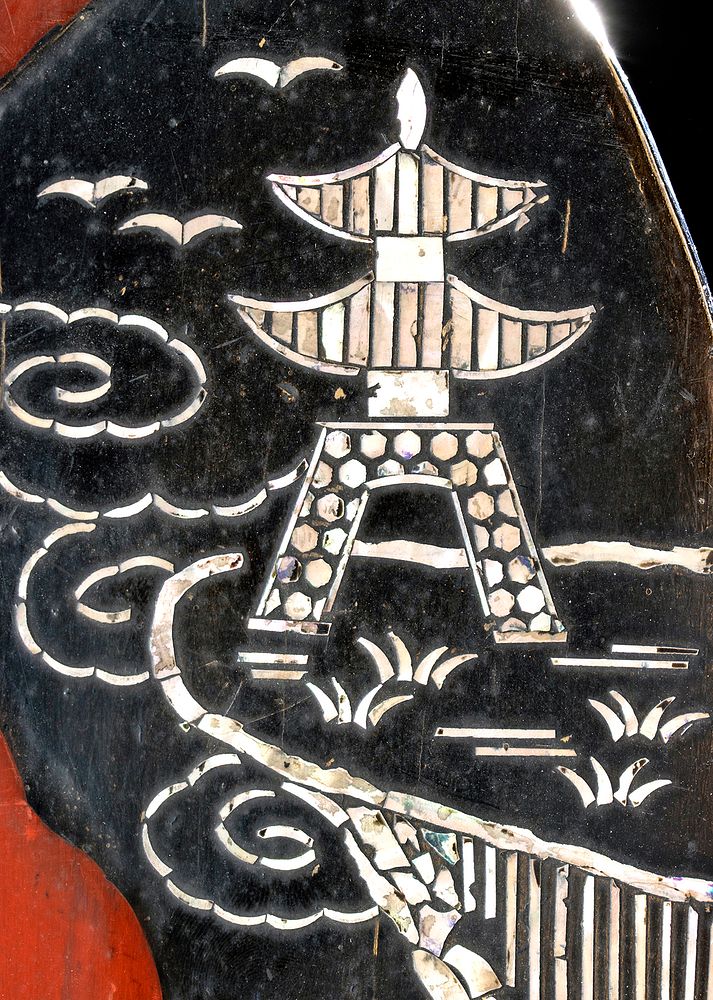
East Asia, Japan, Edo Period, ca. early to mid-19th century CE. A hand-carved wooden war fan known as a gunbai used to signal soldiers and direct troop movement from afar. The heart-shaped fan head has an integral handle rod protruding from both ends, a bulbous red-lacquered symbol centered on both fan faces, and black lacquer enveloping most other surfaces save for the top of the handle. Dozens of petite nacre fragments inlaid into the surface form an elaborate natural scene with a pagoda on the obverse as well as intricate floral motifs on the verso. Traditional raden-ware carvings were inlaid with ivory of different shell types like abalone, however the abundance of mother-of-pearl meant that this was a plentiful and affordable option for embellishment. Size: 9.75" W x 20.875" H (24.8 cm x 53 cm)
For another example of a gunbai with a spear concealed in the handle, please see The Metropolitan Museum of Art, accession number 2018.833.27a,b.
Provenance: private J.H. collection, Beaverton, Oregon, USA, acquired in August 2006; ex-private Onomichi, Hiroshima, Japan collection
All items legal to buy/sell under U.S. Statute covering cultural patrimony Code 2600, CHAPTER 14, and are guaranteed to be as described or your money back.
A Certificate of Authenticity will accompany all winning bids.
We ship worldwide and handle all shipping in-house for your convenience.
#153907Minor abrasions to handle, fan body, and peripheries, with small chips to some nacre fragments, otherwise intact and very good. Light earthen deposits and nice patina throughout.Condition
- Shipping Info
-
All shipping is handled in-house for your convenience. Your invoice from Artemis Gallery will include shipping calculation instructions. If in doubt, please inquire BEFORE bidding for estimated shipping costs for individual items.
-
- Buyer's Premium