Menu

 EUR
EUR CAD
CAD AUD
AUD GBP
GBP MXN
MXN HKD
HKD CNY
CNY MYR
MYR SEK
SEK SGD
SGD CHF
CHF THB
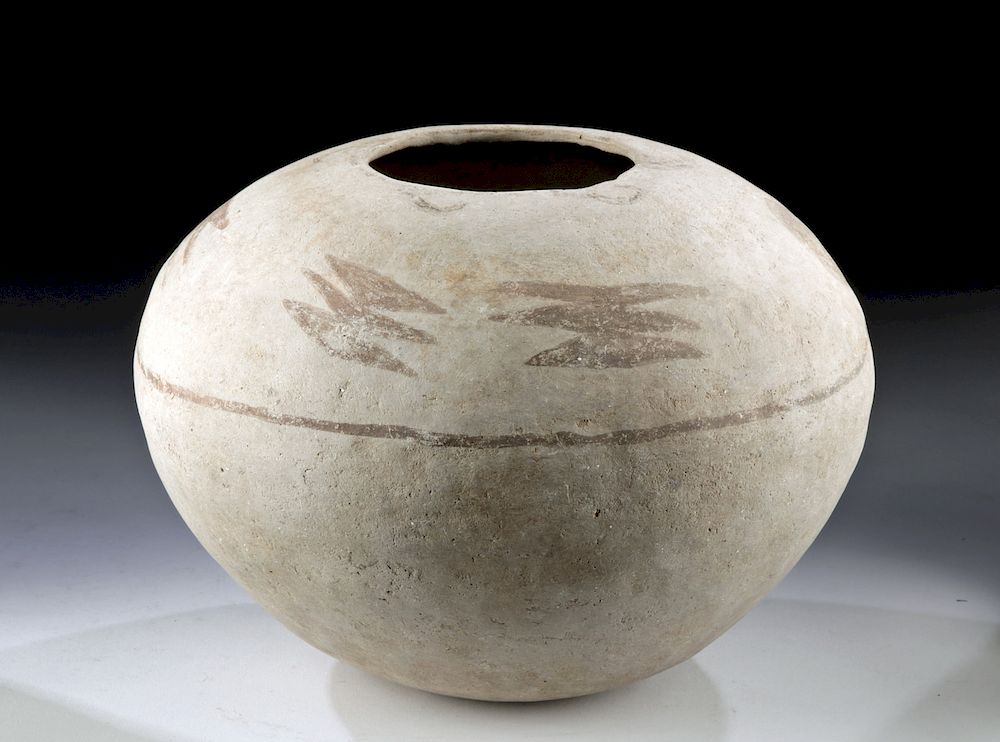
THBLarge Anasazi Pottery Seed Jar - Mesa Verde Museum
Lot 68d

About Seller

Artemis Fine Arts
686 S Taylor Ave, Ste 106
Louisville, CO 80027
United States
Selling antiquities, ancient and ethnographic art online since 1993, Artemis Gallery specializes in Classical Antiquities (Egyptian, Greek, Roman, Near Eastern), Asian, Pre-Columbian, African / Tribal / Oceanographic art. Our extensive inventory includes pottery, stone, metal, wood, glass and textil...Read more
 Live Auction in Progress ... Currently on Lot
 Estimate:
$600 - $900
Absentee vs Live bid
Two ways to bid:
- Leave a max absentee bid and the platform will bid on your behalf up to your maximum bid during the live auction.
- Bid live during the auction and your bids will be submitted real-time to the auctioneer.
Bid Increments
| Price | Bid Increment |
|---|---|
| $0 | $25 |
| $300 | $50 |
| $1,000 | $100 |
| $2,000 | $250 |
| $5,000 | $500 |
| $10,000 | $1,000 |
| $20,000 | $2,500 |
| $50,000 | $5,000 |
| $100,000 | $10,000 |
| $200,000 | $20,000 |
About Auction
 Live
Live
By Artemis Fine Arts
Jul 25, 2019
Set Reminder
2019-07-25 10:00:00
2019-07-25 10:00:00
America/New_York
Bidsquare
Bidsquare : Pre-Columbian | Tribal | Ethnographic
https://www.bidsquare.com/auctions/artemis-gallery/pre-columbian-tribal-ethnographic-4291
Featuring ancient and ethnographic art from around the world, including Pre-Columbian, Native American, African / Tribal, Ethnographic, Spanish Colonial, Fossils, Fine Art, much more. Many Oceanic pieces from an important Tucson, Arizona collection, first time at auction!! Artemis Fine Arts info@artemisfinearts.com
Featuring ancient and ethnographic art from around the world, including Pre-Columbian, Native American, African / Tribal, Ethnographic, Spanish Colonial, Fossils, Fine Art, much more. Many Oceanic pieces from an important Tucson, Arizona collection, first time at auction!! Artemis Fine Arts info@artemisfinearts.com
 View Full Catalog (363)
- Lot Description
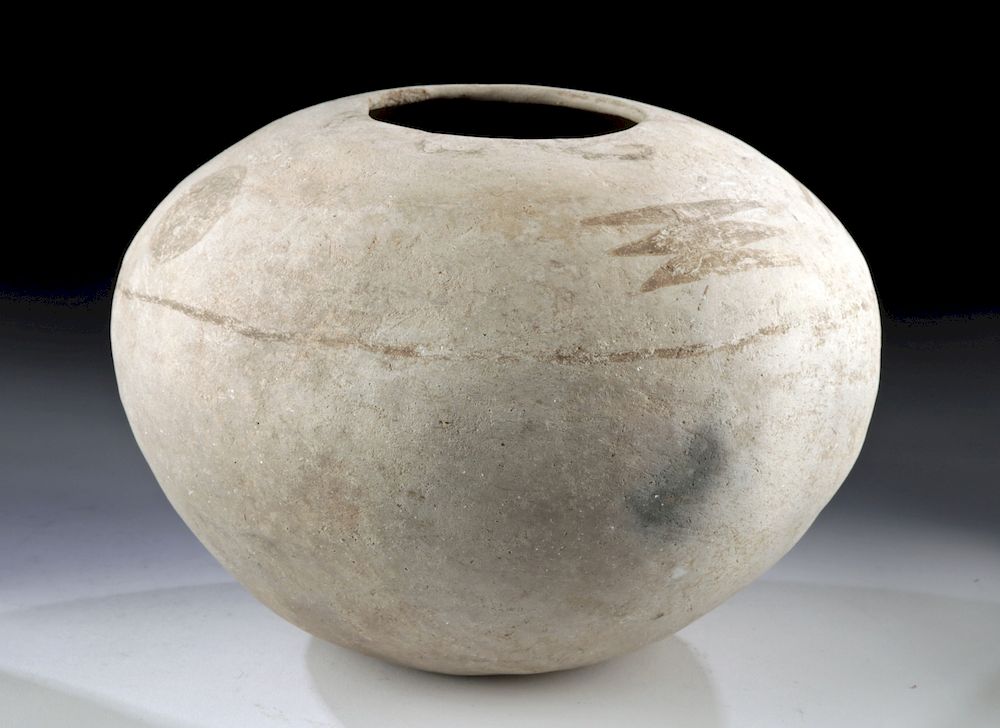
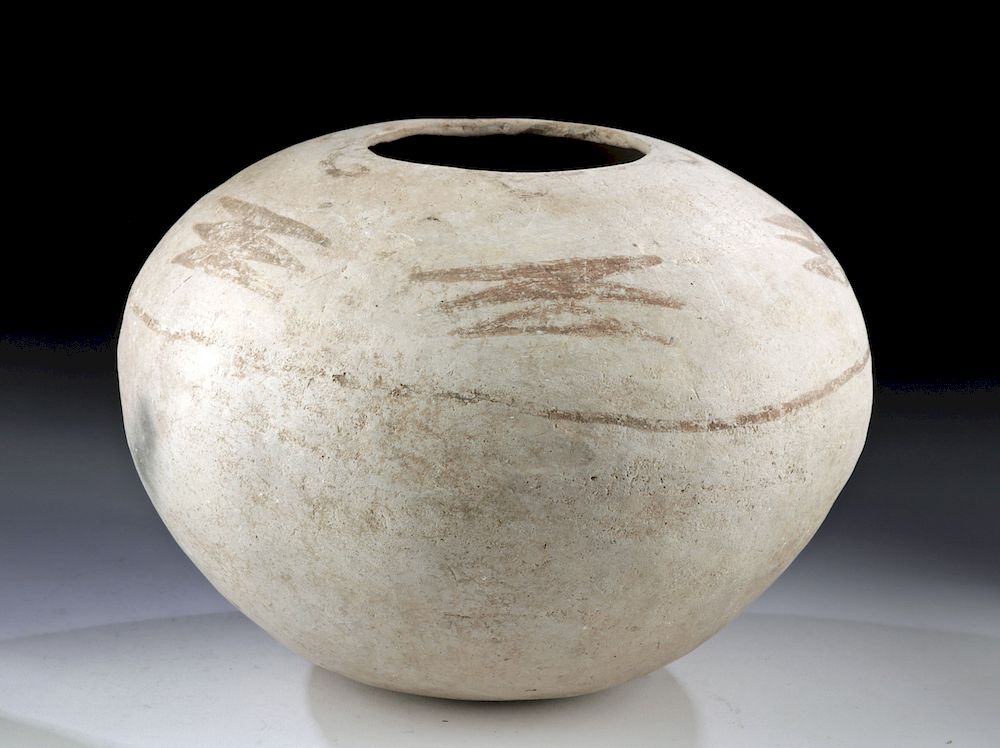
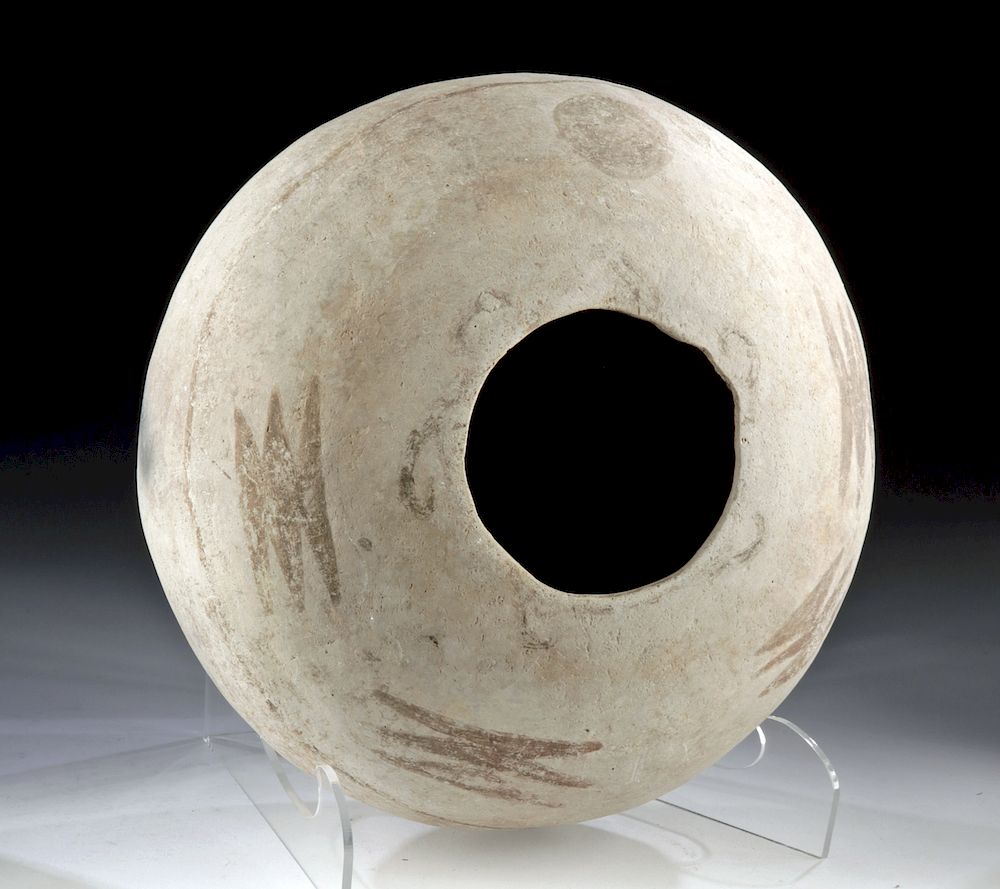
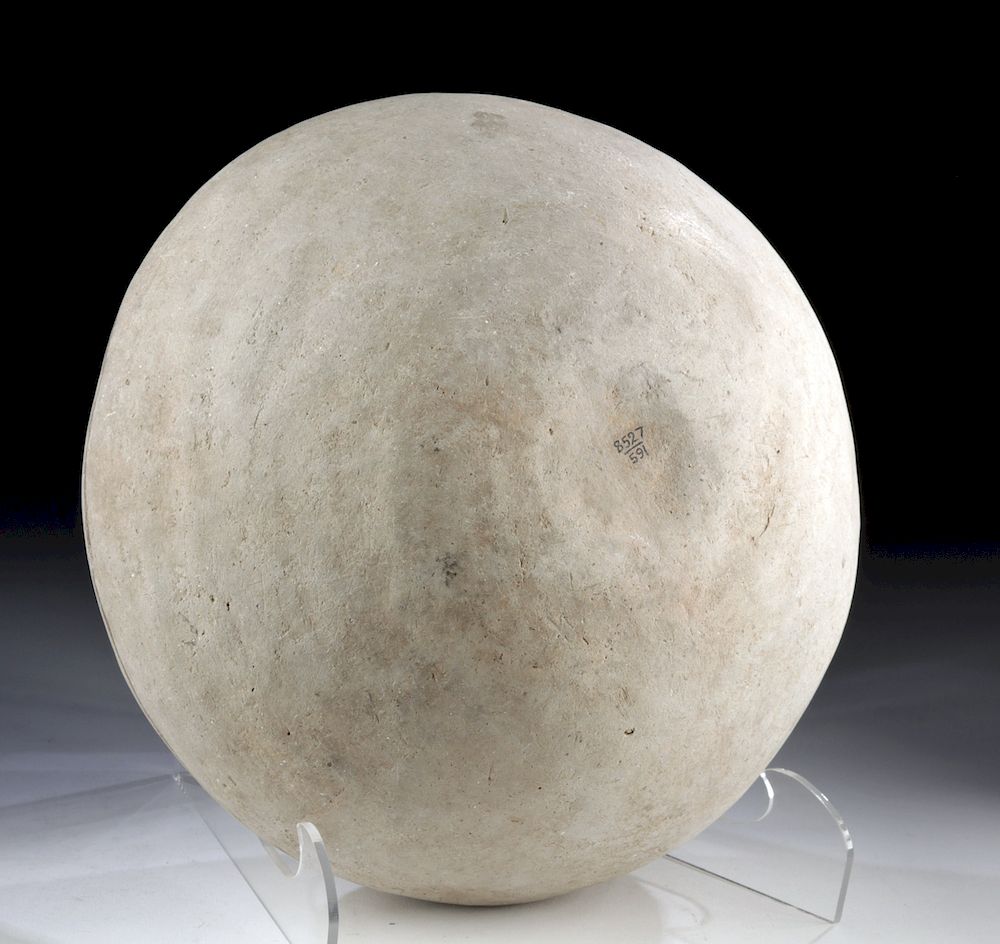
Native American, US Southwest, early Ancestral Puebloan (Anasazi), ca. 800 to 1000 CE. A striking, early example of a large ceramic seed jar with black on unslipped grey motifs of triple zigzags around its broad shoulder, with a round, moon-like ball on one side. The zigzags may have been inspired by lightning or some other natural phenomenon in the dramatic landscape of the Southwest, or, with the inclusion of the moon, possibly the passage of time - calendars were an important motif in the prehistoric Southwest. Wave-like curls around the mouth make it resemble a blazing sun. Seed jars were originally made to protect seeds and other types of food from pests and extreme temperature fluctuations. A slab of flat rock or another bowl turned upside-down were sometimes used as a lid. Many of these jars were broken when their owners needed to extract the seeds, making this intact example a rare find! Size: 8.1" W x 6.6" H (20.6 cm x 16.8 cm)
Provenance: ex-Joan Shaw collection, bought in 1971; loaned to the Mesa Verde Museum, 1962-1970; ex-Bill Mitchell collection, Cortez, Colorado, USA, from 1958-1962
All items legal to buy/sell under U.S. Statute covering cultural patrimony Code 2600, CHAPTER 14, and are guaranteed to be as described or your money back.
A Certificate of Authenticity will accompany all winning bids.
We ship worldwide and handle all shipping in-house for your convenience.
#147997Beautifully preserved and intact, with a few small chips, scratches, and nicks commensurate with age. Nice preservation of pigment on surface as shown. Old collection number written on underside.Condition
- Shipping Info
-
All shipping is handled in-house for your convenience. Your invoice from Artemis Gallery will include shipping calculation instructions. If in doubt, please inquire BEFORE bidding for estimated shipping costs for individual items.
-
- Buyer's Premium