EUR
EUR CAD
CAD AUD
AUD GBP
GBP MXN
MXN HKD
HKD CNY
CNY MYR
MYR SEK
SEK SGD
SGD CHF
CHF THB
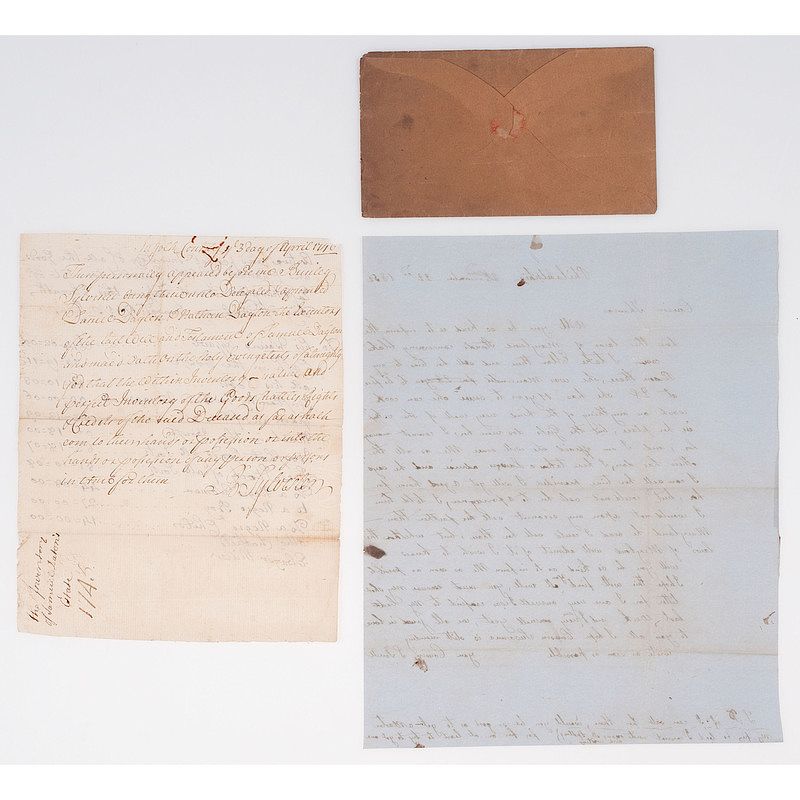
THBNorthern Slave Documents, New York, Pennsylvania, New Jersey
About Seller
6270 Este Ave.
Cincinnati , OH 45232
United States
With offices in Cincinnati, Cleveland and Denver, Cowan’s holds over 40 auctions each year, with annual sales exceeding $16M. We reach buyers around the globe, and take pride in our reputation for integrity, customer service and great results. A full-service house, Cowan’s Auctions specializes in Am...Read more
 Live Auction in Progress ... Currently on Lot
 Two ways to bid:
- Leave a max absentee bid and the platform will bid on your behalf up to your maximum bid during the live auction.
- Bid live during the auction and your bids will be submitted real-time to the auctioneer.
Bid Increments
| Price | Bid Increment |
|---|---|
| $0 | $25 |
| $500 | $50 |
| $1,000 | $100 |
| $2,000 | $250 |
| $5,000 | $500 |
| $10,000 | $1,000 |
| $20,000 | $2,500 |
| $50,000 | $5,000 |
| $100,000 | $10,000 |
About Auction
 Live
LiveNov 16, 2018
Cowan’s Fall American History: Premier Auction features over 200 lots including early photographs, documents, manuscripts, broadsides, flags, and more dating from the Revolutionary War period to the mid-20th Century, many representing important landmark moments in American history. Cowan's Auctions dawnie@cowans.com
 View Full Catalog (222)
- Lot Description
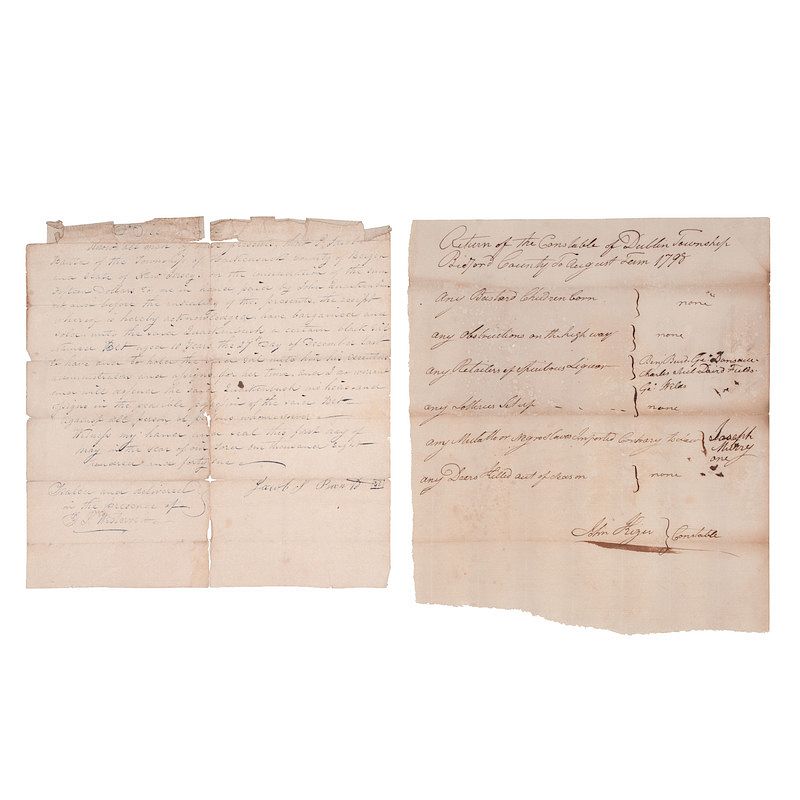
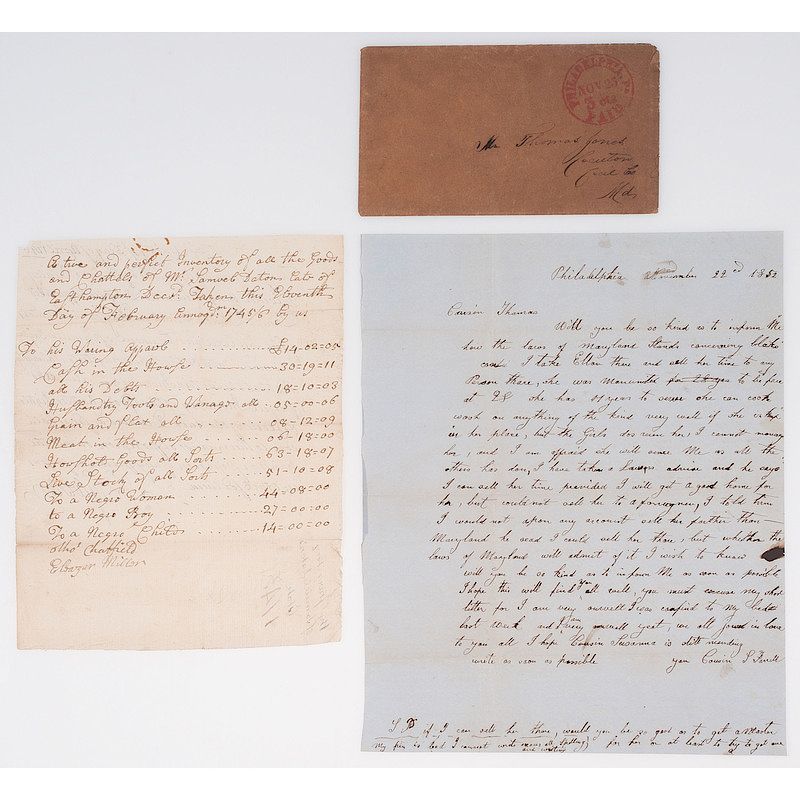
Lot of 4. Inventory of the Estate of Samuel Daton/Dayton, submitted by the executors of the estate, 1p, 6.25 x 7.75 in. February 11, 1745/6. Mentions a Negro woman (value £44. 8s.0p), a Negro Boy (£27.0.0) and a Negro Child (£14.0.0).
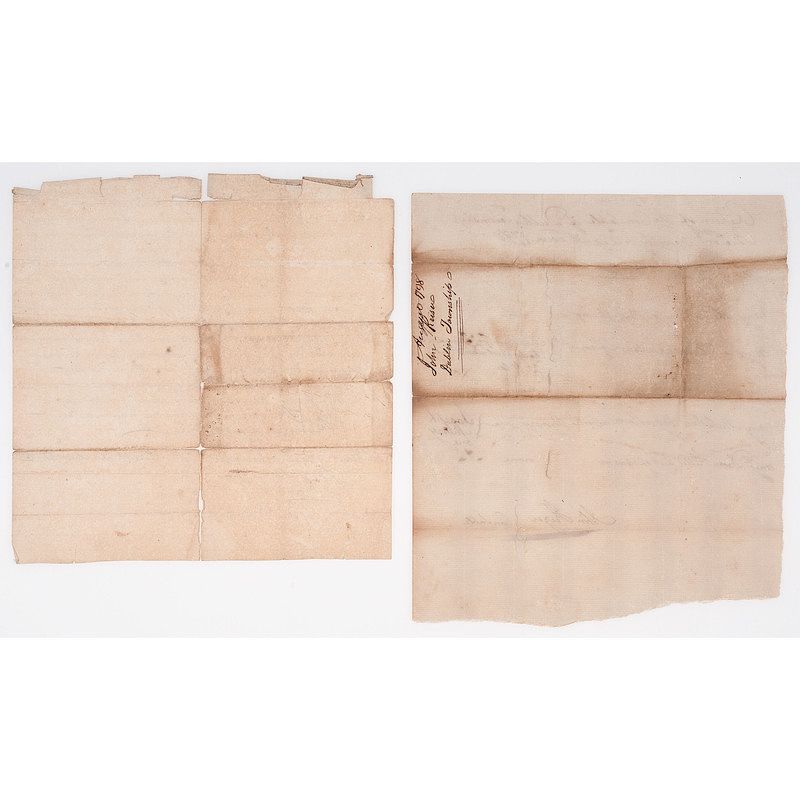
Manuscript document, 1p, approx. 7.5 x 8.5 in. Signed by John Reizer, Constable, August 1798. Manuscript return of the Constable of Dublin Township, Bedford County, (PA). Inventory of illegal activity/problems: Bastard children (none), obstructions on highway (none), retailers of spirituous liquor (at least 5 named); lotteries (none); "any Mulatto or negro slaves Imported Contrary to Law" (one); any deers killed out of season (none).
ALS, 1p, approx. 8 x 10 in. Philadelphia, November 22, 1852. "L. Farrell" inquiring of her(?) cousin, Thomas Jones, in Cecil County, MD whether "can I take Ellan there and sell her time to any person thare, she was manumited to be free at 28 she has 17 years to serve. she can cook wash on anything of the kind...I cannot manage her...." She then asks her cousin if he could find a buyer if she is permitted to sell her there.
ADS, 1p, 7.5 x 8 in. New Jersey, Hackensack Township, Bergen County, May 1, 1841. "For the consideration of the sum Fifteen Dollar to me in hand paid by John Quackenbush... the receipt of whereof is hereby acknowledged, have bargained and sold unto the said Quackenbush a certain black girl named Bet aged 10 years... to hold the said girl unto him, his executors, administrators and assigns for her time..." New Jersey was the last northern state to abolish slavery, the labor being used especially in the ports and in agriculture. The importation of slaves was banned in 1788, and free blacks from elsewhere were also prohibited from settling in the state. In 1804, laws were passed for gradual abolition: children born to slave mothers after July 4, 1804 served long apprenticeships to the owners of their mothers, and then women were free at 21, men at 25. Slaves born before this date were considered lifelong indentured servants. Slavery was supposed to end in 1846, but really ended with the 13th Amendment. In addition, many slaves were sold south before their manumission date, and thus remained slaves for life (or until the 13th Amendment was ratified).
A rare group showing some of the complexities of slavery in the Northern States before the Civil War.
All with some minor scuffing of edges. The NJ doc. with more extensive scuffing at top and folds separating. PA doc with some moderate toning at folds and overall. The PA/MD doc with some ink smears and light toning of folds. TheCondition
- Shipping Info
-
Buyers are required to pay for all packing, shipping and insurance charges. Overseas duty charges are the responsibility of the successful Bidder. Be aware that for larger and/or valuable items, shipping charges can be substantial. - If there is no shipping amount on listed your invoice, you will need to make arrangements to pick up or ship your purchase through an alternative shipping company. Our shipping department can be contacted at 513.871.1670 (ext. 219) or email shipping@cowans.com. - Shipping charges include insurance for your order while in transit. If you have private insurance we will adjust your charge to include only packing and shipping. - Please allow 14 – 21 days after payment to package and ship your purchase as carefully as possible.
-
- Buyer's Premium