Menu

 EUR
EUR CAD
CAD AUD
AUD GBP
GBP MXN
MXN HKD
HKD CNY
CNY MYR
MYR SEK
SEK SGD
SGD CHF
CHF THB
THB SAR
SAR AED
AEDEsphyr Slobodkina, 1908-2002 (Russia/USA)
Lot 130


 Live Auction in Progress ... Currently on Lot
 Estimate:
GBP£8,000 - GBP£16,000
$10,810.81 - $21,621.62
Starting Bid
GBP£4,000
$5,405.41Absentee vs Live bid
Two ways to bid:
- Leave a max absentee bid and the platform will bid on your behalf up to your maximum bid during the live auction.
- Bid live during the auction and your bids will be submitted real-time to the auctioneer.
Bid Increments
| Price | Bid Increment |
|---|---|
| GBP£0 | GBP£5 |
| GBP£50 | GBP£10 |
| GBP£100 | GBP£25 |
| GBP£500 | GBP£50 |
| GBP£1,000 | GBP£100 |
| GBP£10,000 | GBP£500 |
| GBP£50,000 | GBP£1,000 |
| GBP£100,000 | GBP£5,000 |
| GBP£200,000 | GBP£10,000 |
About Auction

 Live
Live
By Cultural Tradition
Jun 2, 2026
Set Reminder
2026-06-02 12:00:00
2026-06-02 12:00:00
America/New_York
Bidsquare
Bidsquare : FINE ART & ANTIQUES
https://www.bidsquare.com/auctions/cultural-tradition/fine-art-antiques-23545
Fine Art & Antiques auction featuring 150 lots, including paintings, prints, decorative and applied arts from the 19th to the 21st century. Cultural Tradition support@cultural-tradition.uk
Fine Art & Antiques auction featuring 150 lots, including paintings, prints, decorative and applied arts from the 19th to the 21st century. Cultural Tradition support@cultural-tradition.uk
 View Full Catalog (150)
- Lot Description
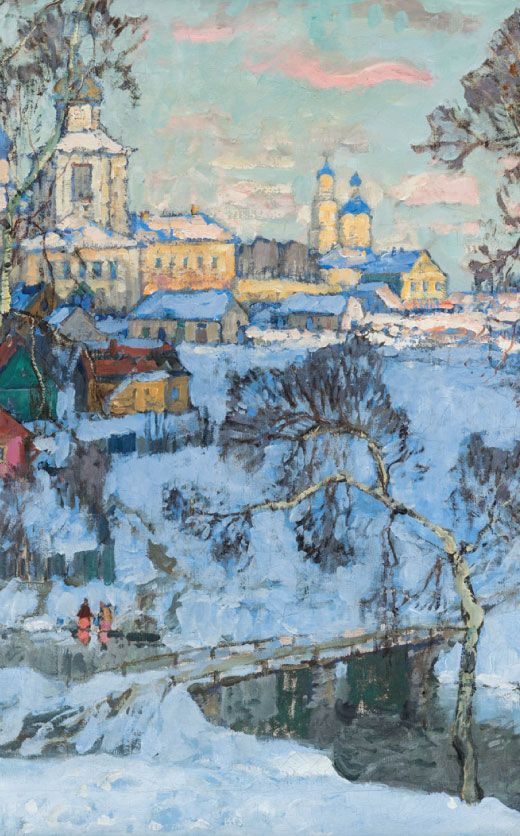
Esphyr Slobodkina (1908-2002).
Abstract composition. 1964.
Oil on canvas, size 91,5 x 59 cm (36 x 23 1/4 inches), frame dimensions 92,5 x 60 cm (36 1/3 x 23 2/3 inches).
Signed and dated lower right.
Esphyr Slobodkina was born in Siberia in 1908. In 1928 Slobodkina immigrated to New York City. She enrolled in the National Academy of Design the following year primarily to meet the requirements of her student visa. It was through a fellow student at the Academy that Slobodkina met her future husband Ilya Bolotowsky. A progressive thinker who had yet to experiment with abstraction in his own painting, Bolotowsky introduced Slobodkina to modern theories of art, particularly in relation to form, colour and composition. Associations with Balcomb and Gertrude Greene, Byron Browne and Giorgio Cavallon further exposed Slobodkina to the ideas of these pioneer abstract artists and sparked a personal interest in the movement. An invitation to the Yaddo artist colony brought Slobodkina and Bolotowsky to Saratoga Springs, New York in the early 1930s. It was during this visit that Slobodkina began tentative experimentation with abstraction, leading to her first Cubist-inspired work in 1934. By 1936 she had fully embraced abstraction as a means of artistic expression and her paintings reflected her interest in collage with their flat, layered forms and carefully constructed arrangements. In 1937 she became a founding member of the American Abstract Artists and went on to be the group's president in later years. In the early 1940s Slobodkina found a patron in A. E. Gallatin who purchased two of her works for his Museum of Living Art. Slobodkina was asked to participate in the important exhibition Eight by Eight: Abstract Painting Since 1940 at the Philadelphia Museum of Art in 1945 which also featured Charles Green Shaw, George L.K. Morris, A.E. Morris, A.E. Morris, and George L.K. Morris. Morris, A.E. Gallatin, Suzy Frelinghuysen, Ilya Bolotowsky, Alice Trumbull Mason, and Ad Reinhardt. She was a regular exhibitor in the Whitney Museum of American Art's annuals through the 1950s.Good condition, general surface soiling, according to age.Condition
- Shipping Info
-
All lots are located in the United Kingdom. We work with professional shipping partners who provide careful packing and worldwide delivery. Shipping costs are the responsibility of the buyer and are not included in the invoice. Buyers may arrange their own courier or request a shipping quote from our recommended shippers after the auction.
-
- Payment & Auction Policies
-
Available payment options

-
- Buyer's Premium