Menu

 EUR
EUR CAD
CAD AUD
AUD GBP
GBP MXN
MXN HKD
HKD CNY
CNY MYR
MYR SEK
SEK SGD
SGD CHF
CHF THB
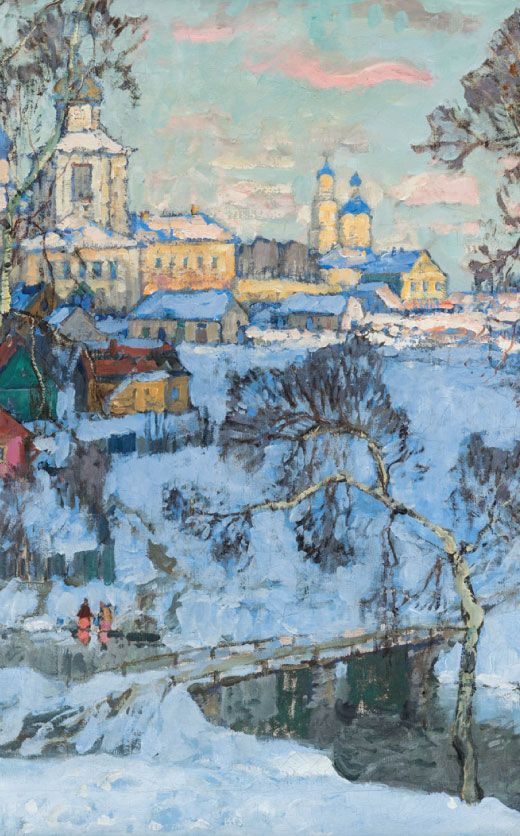
THBALFRED SISLEY (Paris, 1839 – Moret-sur-Loing, 1899) Attributed - Winter Landscape


 Live Auction in Progress ... Currently on Lot
 Estimate:
EUR€90,000 - EUR€100,000
$104,651.16 - $116,279.07
Absentee vs Live bid
Two ways to bid:
- Leave a max absentee bid and the platform will bid on your behalf up to your maximum bid during the live auction.
- Bid live during the auction and your bids will be submitted real-time to the auctioneer.
Bid Increments
| Price | Bid Increment |
|---|---|
| EUR€0 | EUR€10 |
| EUR€50 | EUR€10 |
| EUR€100 | EUR€20 |
| EUR€200 | EUR€25 |
| EUR€500 | EUR€50 |
| EUR€1,000 | EUR€100 |
| EUR€2,000 | EUR€250 |
| EUR€5,000 | EUR€500 |
| EUR€10,000 | EUR€1,000 |
| EUR€20,000 | EUR€2,500 |
| EUR€50,000 | EUR€5,000 |
| EUR€100,000 | EUR€10,000 |
| EUR€200,000 | EUR€25,000 |
| EUR€500,000 | EUR€50,000 |
About Auction

 Live
Live
By Templum Fine Art Auctions
Mar 25, 2026
Set Reminder
2026-03-25 10:00:00
2026-03-25 10:00:00
America/New_York
Bidsquare
Bidsquare : GRAND MARCH AUCTION OF OLD MASTERS AND COLONIAL ART
https://www.bidsquare.com/auctions/templum-fine-art-auctions/grand-march-auction-of-old-masters-and-colonial-art-22766
AUCTION · 25 MARCH · 3:00 PM EXHIBITION OPEN FROM 13 MARCH Templum Fine Art Auctions info@templumauctions.com
AUCTION · 25 MARCH · 3:00 PM EXHIBITION OPEN FROM 13 MARCH Templum Fine Art Auctions info@templumauctions.com
 View Full Catalog (931)
- Lot Description
Oil on canvas. Dimensions: 24 × 38 cm. Signed in the lower right corner. Provenance: Paul Spengler Collection, Mulhouse. Straight and slender, a birch tree stands alone in the middle of a field, as if forgotten there, the sole survivor of an ancient grove or perhaps a hedge that once divided the land into separate plots. Its presence seems almost temporary, although the faint shade of its foliage would hardly hinder the growth of crops when summer arrives. The furrows of the plow trace regular lines that structure the composition through a carefully ordered perspective. The horizon is defined by a low stone wall that marks the edge of the field, and beyond, the gables of a farmhouse emerge from the morning mist; to the right, the church steeple of a village and the compact silhouette of a manor house are also distinguishable. Everything appears perfectly arranged in this silent rural landscape, slumbering under the gentle winter atmosphere. Frost, perhaps even snow, has left its whitish traces here and there. The pale gray sky, characteristic of the cold season, imbues the whole with a cool, uniform tone. Only the freshly turned ochre earth introduces a warm note that seems to herald the promise of spring. Sisley, a master of Impressionism, manages to translate rural life with remarkable depth through delicate atmospheric modulations, combining this sensitivity to light and weather with a surprisingly classical construction of the landscape. Alfred Sisley (1839–1899), a British-born Impressionist painter from Paris, was initially destined for a commercial career and sent to study in London, where he discovered the paintings of John Constable and J.M.W. Turner. Upon returning to Paris, he trained in the studio of Charles Gleyre, where he met Renoir, Monet, and Bazille. In 1863, the four artists decided to settle near the Fontainebleau forest to paint outdoors, actively participating in the establishment of the new Impressionist painting movement. Sisley ...
- Shipping Info
-
To arrange the corresponding logistics, a prior inquiry must be made via email at admin@templumauctions.es.
-
- Buyer's Premium