Menu

 EUR
EUR CAD
CAD AUD
AUD GBP
GBP MXN
MXN HKD
HKD CNY
CNY MYR
MYR SEK
SEK SGD
SGD CHF
CHF THB
THB SAR
SAR AED
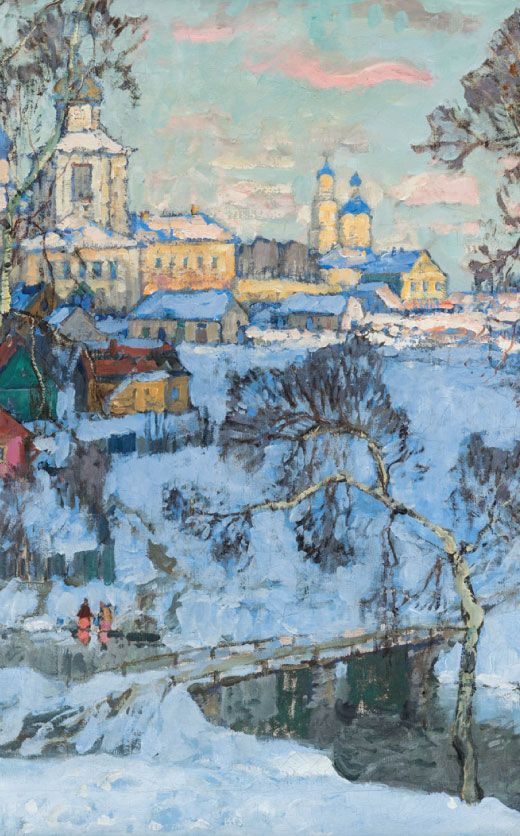
AEDVASILI KANDINSKY (Moscow, 1866 – Neuilly-sur-Seine, 1944) - Village (1909)



 Live Auction in Progress ... Currently on Lot
 Estimate:
EUR€4,000,000 - EUR€5,000,000
$4,705,882.35 - $5,882,352.94
Absentee vs Live bid
Two ways to bid:
- Leave a max absentee bid and the platform will bid on your behalf up to your maximum bid during the live auction.
- Bid live during the auction and your bids will be submitted real-time to the auctioneer.
Bid Increments
| Price | Bid Increment |
|---|---|
| EUR€0 | EUR€10 |
| EUR€50 | EUR€10 |
| EUR€100 | EUR€20 |
| EUR€200 | EUR€25 |
| EUR€500 | EUR€50 |
| EUR€1,000 | EUR€100 |
| EUR€2,000 | EUR€250 |
| EUR€5,000 | EUR€500 |
| EUR€10,000 | EUR€1,000 |
| EUR€20,000 | EUR€2,500 |
| EUR€50,000 | EUR€5,000 |
| EUR€100,000 | EUR€10,000 |
| EUR€200,000 | EUR€25,000 |
| EUR€500,000 | EUR€50,000 |
About Auction

 Live
Live
By Templum Fine Art Auctions
Feb 25, 2026
Set Reminder
2026-02-25 07:00:00
2026-02-25 07:00:00
America/New_York
Bidsquare
Bidsquare : MASTERPIECES FROM EUROPEAN AND INTERNATIONAL PRIVATE COLLECTIONS
https://www.bidsquare.com/auctions/templum-fine-art-auctions/masterpieces-from-european-and-international-private-collections-22539
- SUBASTA DEL 25 DE FEBRERO A LAS 13:00h - EXPOSICIÓN ABIERTA! 13 DE FEBRERO - Lunes a viernes de 10:00 a 14:00 y de 16:00 a 20:00h - Sábados y Domingos: Cerrado Templum Fine Art Auctions info@templumauctions.com
- SUBASTA DEL 25 DE FEBRERO A LAS 13:00h - EXPOSICIÓN ABIERTA! 13 DE FEBRERO - Lunes a viernes de 10:00 a 14:00 y de 16:00 a 20:00h - Sábados y Domingos: Cerrado Templum Fine Art Auctions info@templumauctions.com
 View Full Catalog (908)
- Lot Description
Oil on cardboard. Dimensions: 30.5 x 47.5 cm. Signed “Kandinsky†in the lower left corner. We thank Jean Chauvelin for his assistance in attributing the work. A certificate issued by the aforementioned specialist is included. This work was executed in 1909, during Murnau's pivotal period, a time when Kandinsky radicalized his use of color, simplified forms, and moved toward the expressive autonomy of painting. The composition presents a landscape structured in broad chromatic planes: a winding road in the foreground leads the eye to a cluster of houses at the foot of an intense blue mountain, beneath a vibrant sky in shades of pink and orange. The verticality of the trees balances the scene and reinforces the internal rhythm of the composition. The treatment of color is direct, saturated, and emotional. It does not seek to describe, but rather to convey. The contrasts between acidic greens, deep blues, and luminous yellows create the characteristic plastic tension of Murnau's landscapes. The forms are simplified to the point of near abstraction, yet they still retain a recognizable reference to the Bavarian environment that so greatly influenced the artist during these years. The work has been the subject of an exhaustive scientific study conducted by Laurette Thomas and Ilenia Cassan (Paris, April 2, 2007), including multispectral infrared reflectography and physicochemical analyses using SEM and XRF. The reflectography confirms the presence of an underdrawing beneath the charcoal and demonstrates that the signature, perfectly integrated into the paint layer, is contemporary with the execution of the work. The pigment analyses identify lead white, zinc white, barytine, Prussian blue, manganese violet, cinnabar, chromium oxide green, chromium yellow, anglesite, and calcium and magnesium carbonates with silica. These are heavy, stable pigments with a high refractive index, frequently used by Kandinsky in 1909. The report concludes that the palette, cardboard ...
- Shipping Info
-
Si desea obtener un presupuesto de transporte asegurado, envíe su factura a hola@thepackengers.com
Los lotes se encuentran repartidos entre nuestros almacenes de Madrid, Barcelona( otros) por lo que es necesario coordinar la recogida y el envío con anticipación. Para organizar la logística correspondiente, se deberá realizar una consulta previa al correo electrónico admin@templumauctions.es.
-
- Buyer's Premium