Menu

 EUR
EUR CAD
CAD AUD
AUD GBP
GBP MXN
MXN HKD
HKD CNY
CNY MYR
MYR SEK
SEK SGD
SGD CHF
CHF THB
THBHuge Decorated Mycenaean Terracotta Amphora - Sotheby's
Lot 17



About Seller

Artemis Fine Arts
686 S Taylor Ave, Ste 106
Louisville, CO 80027
United States
Selling antiquities, ancient and ethnographic art online since 1993, Artemis Gallery specializes in Classical Antiquities (Egyptian, Greek, Roman, Near Eastern), Asian, Pre-Columbian, African / Tribal / Oceanographic art. Our extensive inventory includes pottery, stone, metal, wood, glass and textil...Read more
Categories
 Live Auction in Progress ... Currently on Lot
 Estimate:
$45,000 - $65,000
Absentee vs Live bid
Two ways to bid:
- Leave a max absentee bid and the platform will bid on your behalf up to your maximum bid during the live auction.
- Bid live during the auction and your bids will be submitted real-time to the auctioneer.
Bid Increments
| Price | Bid Increment |
|---|---|
| $0 | $25 |
| $300 | $50 |
| $1,000 | $100 |
| $2,000 | $250 |
| $5,000 | $500 |
| $10,000 | $1,000 |
| $20,000 | $2,500 |
| $50,000 | $5,000 |
| $100,000 | $10,000 |
| $200,000 | $20,000 |
About Auction
 Live
Live
By Artemis Fine Arts
Feb 18, 2021
Set Reminder
2021-02-18 10:00:00
2021-02-18 10:00:00
America/New_York
Bidsquare
Bidsquare : Exceptional Antiquities, Asian, Ethnographic
https://www.bidsquare.com/auctions/artemis-gallery/exceptional-antiquities-asian-ethnographic-6373
Museum-worthy examples of Egyptian, Greek, Roman, Etruscan, Near Eastern, Far East / Asian, Pre-Columbian, African / Tribal, Oceanic, Native American, Spanish Colonial, Russian, Fossils, Ancient Jewelry, Fine Art, so much more! Artemis Fine Arts info@artemisfinearts.com
Museum-worthy examples of Egyptian, Greek, Roman, Etruscan, Near Eastern, Far East / Asian, Pre-Columbian, African / Tribal, Oceanic, Native American, Spanish Colonial, Russian, Fossils, Ancient Jewelry, Fine Art, so much more! Artemis Fine Arts info@artemisfinearts.com
 View Full Catalog (356)
- Lot Description
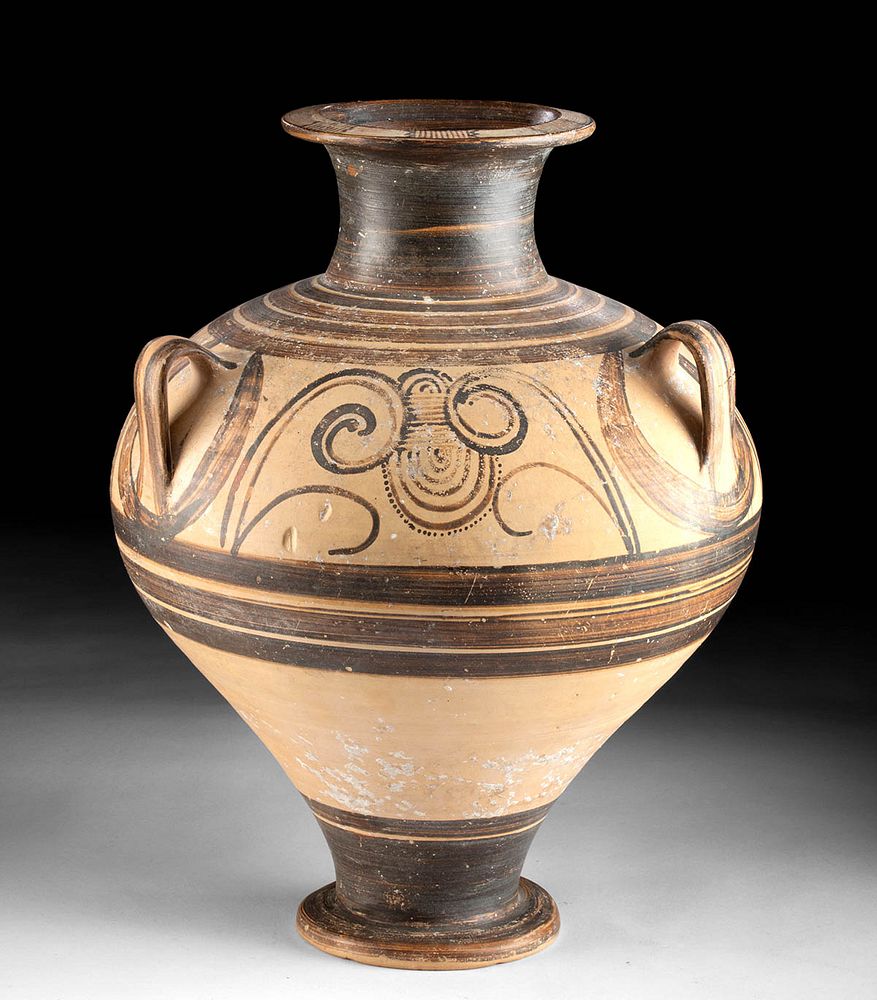
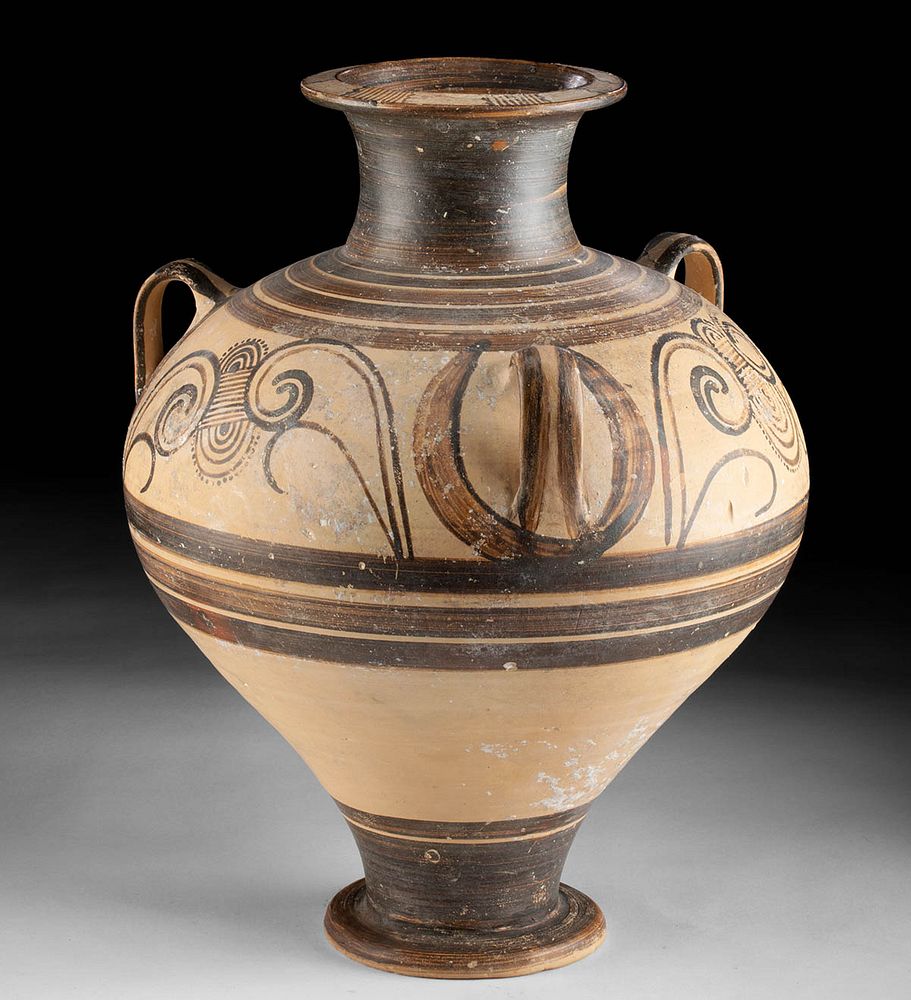
Classical Greece, Mycenae, ca. 14th century BCE. This jar is an unusually large and rare example of a Mycenaean amphora. It is made from terracotta and decorated with classic Mycenaean banded lines and abstract floral motifs. It has three looped handles on the shoulders, each adorned in black along with a flaring neck and broad flat rim. Some authors have suggested that the designs on them denote their location; for example, jars depicting octopi may represent trade goods taken from the island of Crete during the Mycenaean period. Size: 10" W x 12.5" H (25.4 cm x 31.8 cm)
Terracotta stirrup jars first appeared in Crete in the 16th century BCE and became popular with the Mycenaeans in the 14th century BCE after they conquered Minoan Crete. During the 14th century BCE, they were the most produced pottery type in Mycenae. Amphorae such as this were most often used to store wine and oil and were crucial to trade in the Aegean. Museum collections around the world include ancient Greek amphora like this incredible example: the British Museum, the Louvre, the Metropolitan Museum of Art, the Getty, and many others.
Provenance: ex Royal Athena Galleries; ex Sotheby's, New York, USA, June 12 2003, lot 1; Private European Collection
All items legal to buy/sell under U.S. Statute covering cultural patrimony Code 2600, CHAPTER 14, and are guaranteed to be as described or your money back.
A Certificate of Authenticity will accompany all winning bids.
We ship worldwide and handle all shipping in-house for your convenience.
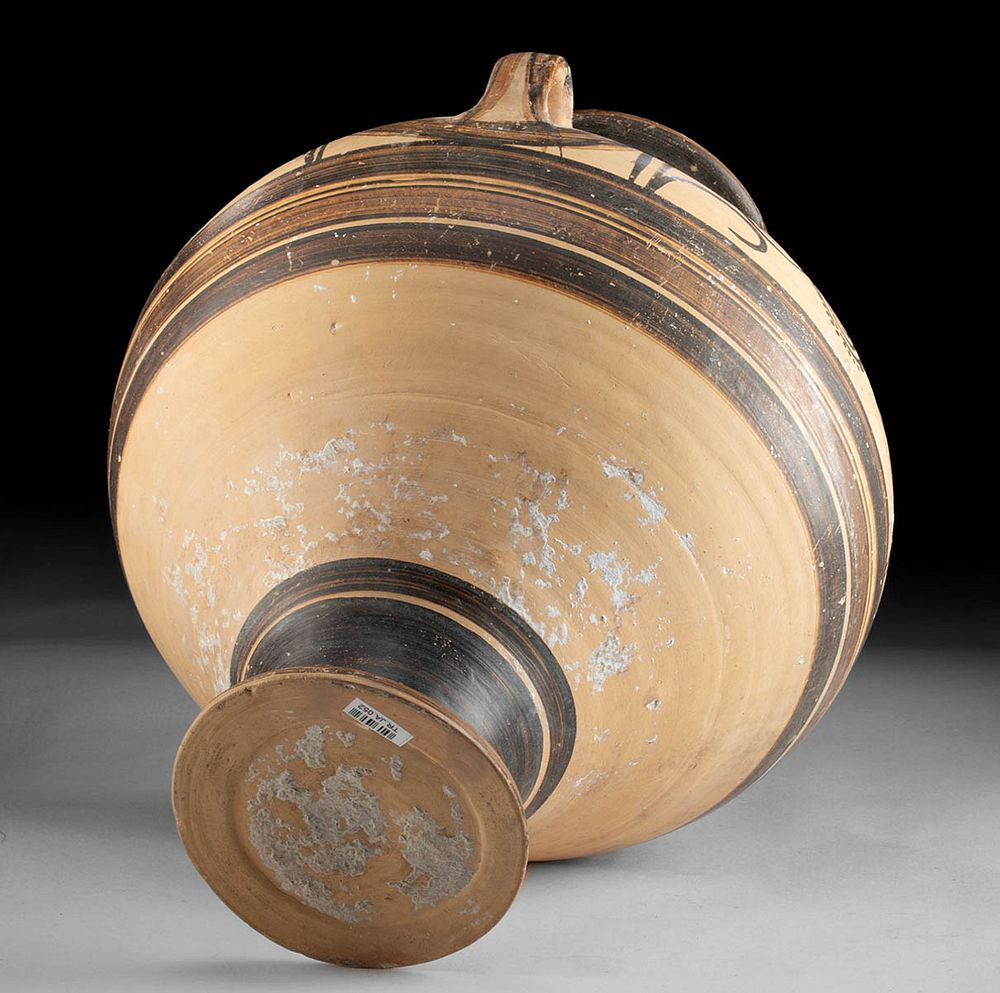
#162411Remarkably intact and near choice. Minor surface spalls and deposits.Condition
- Shipping Info
-
All shipping is handled in-house for your convenience. Your invoice from Artemis Gallery will include shipping calculation instructions. If in doubt, please inquire BEFORE bidding for estimated shipping costs for individual items.
-
- Buyer's Premium