EUR
EUR CAD
CAD AUD
AUD GBP
GBP MXN
MXN HKD
HKD CNY
CNY MYR
MYR SEK
SEK SGD
SGD CHF
CHF THB
THBWinter Warmth & Timeless Storage: The Enduring Appeal of the Antique Blanket Chest
As winter settles in, our homes naturally turn toward comfort. Extra blankets reappear, textiles grow heavier, and interiors take on a more layered, intimate feel. Few antiques feel as seasonally relevant, or as enduringly useful, as the blanket chest. Originally designed to safeguard textiles and personal belongings, it remains a functional and visually compelling form well suited to modern life.
Blanket chests first emerged in seventeenth-century Europe, when built-in closets were rare and households relied on sturdy wooden chests to store linens, clothing, and valuables. Often placed at the foot of the bed, these early examples doubled as seating and were built for longevity, featuring dovetail joinery, iron hardware, and flat or lift-top lids that favored durability over ornament.
Their importance only grew in America, where early homes similarly lacked closets and damp cellars made elevated storage essential. Blanket chests became indispensable household furnishings, protecting bedding from moisture and pests while anchoring bedrooms with both function and form. Regional styles soon developed, shaped by available materials and local traditions. Pine and poplar were common for everyday use, while walnut and cherry signaled higher status. Painted surfaces, particularly in Pennsylvania and the South, transformed utilitarian objects into expressions of folk art and regional identity.
By the nineteenth and early twentieth centuries, the form evolved into the hope chest, imbued with sentimental meaning and associated with preparing for marriage. Though its symbolism shifted over time, the blanket chest never lost its appeal. Even as modern homes introduced closets and built-in storage, it endured as a decorative object that continued to serve a purpose.
Today, antique blanket chests feel especially at home in winter interiors. They offer elegant storage for quilts, throws, and seasonal textiles while adding warmth, texture, and history to a space. Whether placed at the foot of a bed, in a hallway, or as a statement piece in a living area, they bridge past and present with remarkable ease. Several outstanding examples currently offered on Bidsquare highlight the craftsmanship and regional character that define this enduring furniture form.
Featured Auction Highlights:
Rare Diminutive Mahantongo Valley Painted Poplar Blanket Chest
This rare diminutive blanket chest from Pennsylvania’s Mahantongo Valley exemplifies the strong regional identity that defines painted American furniture. Crafted from poplar and decorated with bold, expressive paint, the chest reflects the folk traditions of central Pennsylvania, where surface decoration transformed everyday objects into deeply personal works of art. Its smaller scale adds to its appeal, making it particularly well suited for modern interiors where space is more limited. Pieces like this were originally intended to safeguard precious textiles through long winters, a function that remains just as relevant today.

Lot 25
Estimate: $30,000 - $50,000
Pook & Pook Inc.
January 14, 2026
Lancaster County, Pennsylvania Walnut Blanket Chest
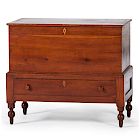
This Lancaster County blanket chest, crafted from walnut, represents a more restrained but equally compelling tradition of Pennsylvania furniture making. Known for its sophisticated joinery and high-quality materials, Lancaster County produced chests that balanced practicality with refinement. The rich walnut surface and confident proportions give this example a timeless presence, allowing it to function seamlessly as both storage and statement furniture. In a contemporary setting, it offers warmth and gravitas while maintaining its original utilitarian purpose.

Lot 201
Estimate: $1,000 - $2,000
Pook & Pook Inc.
January 14, 2026
Rare North Carolina Former MESDA Paint-Decorated Yellow Pine Blanket Chest
This exceptional paint-decorated blanket chest from North Carolina showcases the bold visual language of Southern decorative arts. Constructed from yellow pine and featuring vivid surface decoration, the chest speaks to a regional tradition where color and pattern played a central role in household furnishings. Its former association with MESDA underscores its historical significance and rarity. Originally built to protect linens from damp conditions and pests, the chest now serves as a striking reminder of how function and artistry coexisted in early Southern homes.

Lot 22
Estimate: $6,000 - $9,000
Brunk Auctions
January 29, 2026
Pennsylvania Paint-Decorated Tulip Poplar Blanket Chest
Tulip poplar was a favored wood among Pennsylvania craftsmen due to its workability and suitability for painted finishes. This paint-decorated blanket chest highlights the enduring appeal of that tradition, with a surface that brings warmth and visual interest to the form. Painted chests like this were often deeply personal objects, reflecting local tastes and family pride. Today, the chest’s decorative presence makes it an ideal anchor for a bedroom or living space, while still offering practical storage for blankets and seasonal textiles.

Lot 4
Estimate: $300 - $500
Locati LLC
January 18, 2026
Diminutive Smoke-Decorated Yellow-Painted Pine Blanket Chest, Early 19th Century
This diminutive early nineteenth-century blanket chest features smoke decoration beneath a yellow-painted surface, a technique that lends subtle movement and texture to the piece. Crafted from pine, it embodies the ingenuity and resourcefulness of early American furniture makers, who elevated simple materials through inventive finishes. Its compact size makes it especially appealing for modern homes, where it can function as both decorative accent and storage. Like all blanket chests, it was designed to protect warmth-giving textiles, a purpose that feels especially fitting during the winter season.

Lot 72
Estimate: $600 - $800
Locati LLC
January 18, 2026
These chests remind us that good design does not lose relevance with time. As winter invites us to slow down and surround ourselves with warmth, the blanket chest returns to its original purpose, holding the very textiles that make a home feel comfortable and lived in. At the same time, it stands as a tangible link to the past, offering collectors and design enthusiasts a way to incorporate history into everyday life.
View more furniture and register to bid on Bidsquare.com.
Similar Posts
-
 Illuminated Narratives: Monumental Stained Glass by Fray Arnaldo Marcolino Maas
 -
 Spring Discoveries: Auction Highlights from Austin Auction Gallery’s March Fine Sales
 -
 Art Nouveau Icons & Jet-Age Glamour: Vintage Poster Highlights at Potter & Potter
 -
 Exceptional Fine Art and Decorative Highlights to Watch This March
 -
 Five Antique Quilts That Showcase the Art of American Patchwork
 -
 Broadway in Print: Vintage Theater Posters Head to Auction
 -
 Ephraim Faience Framed Art Pottery Tiles: Nature and Craftsmanship in the Arts & Crafts Tradition
 -
 Collecting Across Centuries: Warhol, Washington, and Wizard of Oz Memorabilia
- Illuminated Narratives: Monumental Stained Glass by Fray Arnaldo Marcolino Maas
- Spring Discoveries: Auction Highlights from Austin Auction Gallery’s March Fine Sales
- Art Nouveau Icons & Jet-Age Glamour: Vintage Poster Highlights at Potter & Potter
- Exceptional Fine Art and Decorative Highlights to Watch This March
- Five Antique Quilts That Showcase the Art of American Patchwork
- Broadway in Print: Vintage Theater Posters Head to Auction
- Ephraim Faience Framed Art Pottery Tiles: Nature and Craftsmanship in the Arts & Crafts Tradition
- Collecting Across Centuries: Warhol, Washington, and Wizard of Oz Memorabilia
- Artist Spotlight: Dieter Roth
- Timeless Adjustments: Four Exceptional Watches to Mark Daylight Saving Time